 Donegal, the most northerly county of Ireland, has a rich and distinctive fiddle tradition. It’s a tradition that has given us some great exponents and perhaps the name Jack Houston can now be added to such luminaries as Con Cassidy, Mairead Ni Mhaonaigh, and Tommy Peoples, whose inspiration is found throughout jack’s new album, The Broken Fiddle (An Fhidil Bhriste).
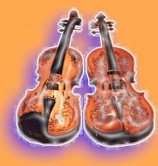
That’s a surprising title but, like all of this album, there is a story behind it. It refers to a painful childhood memory when Jack’s fiddle was dropped and broken into several pieces. It’s now been repaired and appropriately features on the title track, which opens the album. The tune is an unmistakably Irish reel, written by Jack, and the restored instrument makes a wonderful sound. A strong opening.
A set of Strathspeys follows, the first written by Jack and the others by Tommy Peoples. Strathspeys might be unexpected here, but part of the distinctiveness of the Donegal tradition is its inclusion of Scottish styles. The county has strong historic links to Scotland, which is part of the inspiration for this track, along with the fate of local Ash Trees, a local ring fort, Tommy Peoples, and a visit from little people. That last one explains the tracks title, ‘Otherworld,’ and the mystical feel of the opening tune. The next two tunes bring a lighter, gentler feel.
‘Gaeltacht’ consists of two fine reels. The first is traditional and has a paired back feel, with a drone in the background. The second, written by Tommy Peoples, is a more flowing tune. The Gaeltacht is the Gaelic speaking regions of Ireland, and this track is inspired by Jack’s love for the Donegal Gaeltacht, with its beautiful landscape and rich musical traditions.
By contrast, Jack describes the two tunes in the next track ‘Galltachd (Lowlands)’ as barn dances. The tunes, written for close friends made when Jack lived in Glasgow, are joyful, playful, and affectionate. The first is very jaunty, while the second has a more relaxed feel and is given extra depth by the addition of piano and guitar.
We go on to the North of Scotland with ‘Gaedhealtachd (Highlands),’ a set of tunes written for Jack’s friends in the Highland musical tradition. The first tune is a March, played with beautiful clarity on fiddle, complemented by double bass. The tempo builds through a Strathspey and then two fiery Reels. Pulsating stuff.
Both of Jack’s grandfathers grew up in the Laggan Valley in East Donegal. This area, bordering County Derry, and where Gaelic and Ulster-Scots cultures have historically interacted, is the inspiration for ‘Lagan.’ The set of three jigs opens with a lilting and cheerful feel, before moving into the more atmospheric second tune, with bodhran percussion. These first two tunes were written for the two grandfathers. The third tune, a nicely rhythmic piece, is for another Laggan Valley native, Tommy Peoples.
Jack’s hometown, Burt, provides inspiration for ‘An Beheart,’ another set of three tunes, once more reflecting Scottish influences. A fast opening sequence begins two Highlands composed by Jack, before concluding with a lively and uplifting Strathspey by James Scott-Skinner. I’d challenge anyone to keep their feet still while listening to this.
There are a range of different tunes on this album and ‘Cnoc na Smug’ is a Mazurka. It’s also a beautiful tune, slower and reflective. That’s appropriate because this is a reflection on feeling close to someone despite physical distance. Early in their relationship, Jack and his fiancé found themselves separated by lockdown.
It’s back to upbeat dance tunes on ‘Buncrana,’ a set of three great reels celebrating the Inishowen Peninsula, and some of the characters who live, or have lived there. ‘Buncrana’ is the first of three sets inspired by Inishowen. The town of Culdaff provides inspiration for ‘Cuil Dabhcha.’ This opens with a beautiful and gentle tune, with good piano accompaniment, and written for Jack’s fiddle teacher. Two joyfully infectious jigs follow, the first written by the fiddle teacher herself, Roisin McGrory. This Inishowen trilogy ends with ‘Fidileiri na hinse (The Inishowen Fiddlers).’ This is another set of cracking dance tunes, celebrating local players. One of these, Melanie Houton, wrote the last tune of the set, ‘Dance of the Bow.’
The tempo slows down for the beautiful closing track. The tune of the Gaelic hymn ‘Be Thou my Vision (Rop Tu Mo Bhaile)’ is recorded here, live in a church in Culdaff. With its paired down feel, this is a wonderfully atmospheric end that is only made more moving by the imperfections of the recording. The birdsong, recorded at Malin Head, is a nice addition.
It could be said that instrumental albums have less general appeal than those with vocals and The Broken Fiddle might appeal most to serious folk fans. That said, for anyone with a love of Irish, and wider Celtic music, this is a real treat. Jack describes himself as having “middling-to-fair ability on the fiddle” but I can’t agree with that. In fact, it might make some who think of themselves are fair-to-middling musicians weep! I found his playing hugely impressive throughout. I should also add that he had good support from others, including Ella McGrory (piano), Jack Warnock (guitar), and Charlie Stewart (double bass).
That assessment of his ability reflects what seems to be Jack’s thoughtful, self-effacing personality. The selection of tracks reflects that thoughtful approach. He’s also a good painter, judging from his delightful sleeve art. Jack concludes his detailed sleeve notes, saying that faced with the soullessness of AI, human performance gives music its soul. That includes any imperfections, and Jack has resisted tidying up any imperfections in his playing on the album. Well, I daresay one could find imperfections here, but I wouldn’t change any of it.
Graham Brown
Artist’s website: Facebook
 Thanks for stopping by. Please help us continue and support us by tipping/donating to folking.com via
You must be logged in to post a comment.